Yellow Jackets vs Bees: What Homeowners Should Know
If you’ve noticed stinging insects buzzing around your home, you’re not alone. One of the most common questions we get is whether people are dealing with bees or yellow jackets—and the answer matters more than you might think. The approach to pest control, safety concerns, and even local regulations can all change depending on which insect you’re dealing with.
Understanding the difference can help you avoid unnecessary risks and make smarter decisions about pest extermination.
Not All Stinging Insects Are the Same
From a distance, bees and yellow jackets can look pretty similar. Up close, they behave very differently.
Yellow jackets are aggressive, fast-moving, and tend to hover around food, trash cans, and outdoor gatherings. Bees, on the other hand, are typically focused on flowers and pollination.
Here’s where most homeowners start to notice the difference:
- Yellow jackets are smooth-bodied, bright yellow and black, and more likely to sting multiple times
- Bees are fuzzier, rounder, and usually sting only when threatened
If you’re seeing insects dive-bombing your drink or circling your outdoor dining area, you’re most likely dealing with yellow jackets—not bees.
Why Yellow Jackets Are a Bigger Problem Around Homes
Bees play an important role in the environment, and in many cases, they should be left alone or safely relocated. Yellow jackets don’t offer that same benefit to your property, and they can quickly become a hazard.
They tend to build nests:
- Underground in lawns
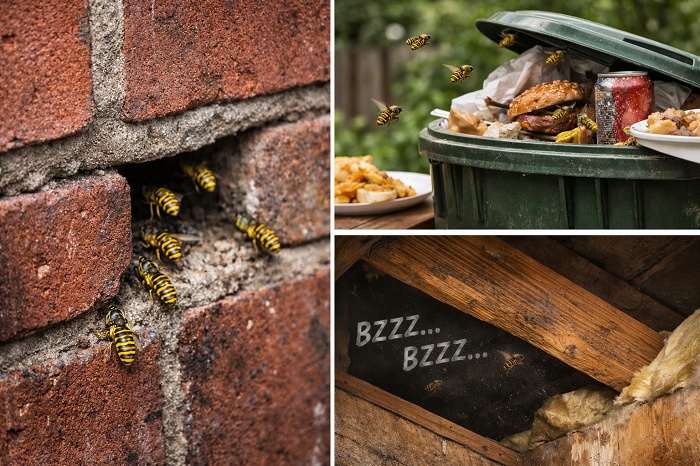
- Inside wall voids
- Around eaves, attics, and sheds
Once a nest is established, activity ramps up fast. Late summer and early fall are when things usually get worse. Food becomes scarce, and yellow jackets become more aggressive, especially around people.
That’s when yellow jacket pest control becomes less of an option and more of a necessity.
What It Means for Your Safety
A single bee sting is unpleasant. A yellow jacket encounter can turn into multiple stings in seconds — find out what to do when yellow jackets enter your living space before the situation escalates.
Unlike bees, yellow jackets can sting repeatedly without dying. They also release pheromones that signal other members of the colony to attack. That’s why people often report getting stung several times at once.
If you have kids, pets, or anyone with allergies in your household, the risk goes up significantly.
Ask yourself:
Are you seeing more activity near entry points or outdoor spaces?
Have stings already happened, or are they getting more aggressive?
Is the problem spreading instead of staying contained?
If the answer is yes to any of those, it’s time to look at professional pest control options.
DIY vs Professional Yellow Jacket Pest Control
It’s tempting to grab a can of spray and try to handle the problem yourself. Sometimes that works—if the nest is small and easy to access. But more often, it leads to incomplete removal or a dangerous situation.
Yellow jackets defend their nests aggressively. Disturbing the colony without proper protection can escalate things quickly.
Professional pest extermination focuses on:
- Identifying the exact nest location (even when hidden)
- Using targeted treatments that eliminate the colony
- Preventing future nesting in the same area
The goal isn’t just to kill a few insects you can see—it’s to remove the source.
How This Fits Into Your Overall Pest Control Plan
Most homeowners don’t deal with just one pest issue at a time. Conditions that attract yellow jackets—like food waste, moisture, or structural gaps—can also invite other pests, including other stinging and biting pests that emerge as temperatures rise.
It’s common to bundle services like:
- Cockroach pest control for kitchens and food storage areas
- Mice pest control for garages, attics, and wall spaces
- Bed bug pest control for homes with frequent travel or guest turnover
A more complete pest control plan helps reduce the chances of recurring problems. Instead of reacting to each new issue, you’re putting a system in place that keeps your home protected year-round.
What to Expect When You Call for Service
Once you reach out, the process is pretty straightforward. The first step is always an inspection. That’s where we figure out exactly what you’re dealing with—yellow jackets, bees, or something else entirely.
From there:
- We locate the nest and assess how active the colony is
- Treatment is applied in a way that minimizes risk to your household
- Follow-up may be recommended depending on nest size and location
You don’t need to guess or take risks. The idea is to handle the problem efficiently so you can get back to using your space normally.
Signs You Shouldn’t Ignore
Some infestations are obvious. Others build slowly until they become a bigger issue.
Keep an eye out for:
- A steady stream of insects entering and exiting the same spot
- Increased activity around trash bins or outdoor eating areas
- Buzzing sounds coming from inside walls or ceilings
These are usually signs of an active nest nearby.
Bee or Yellow Jacket? When It’s Hard to Tell
There are situations where identification isn’t clear. Some bees can look similar, and lighting or distance doesn’t always help.
That’s where experience comes in. Misidentifying the insect can lead to the wrong treatment—or unnecessary harm to beneficial pollinators.
If there’s any uncertainty, it’s better to have it checked. A quick inspection can save you from dealing with a much larger problem later.
Taking Action Before It Gets Worse
Waiting too long tends to make things harder. Nests grow, colonies expand, and the chances of stings increase over time.
Addressing the issue early:
- Reduces the size of the infestation
- Limits the risk to your family and pets
- Makes treatment faster and more effective
It’s one of those situations where early action really does make a difference.
Schedule Bed Bug Treatment Today
Contact us today for help with bed bugs.
Don’t let a small infestation become a major problem. Patriot Pest Control offers reliable bed bug extermination in Jackson, MI, designed to restore comfort and peace of mind.