

Why Wasps Keep Nesting Under Vinyl Siding in Jackson Homes
That low hum behind the siding on a warm afternoon isn’t the house settling. Somewhere between the vinyl and the sheathing, a wasp colony has set up shop, and it picked your place on purpose.
Jackson homeowners call us about this every summer, usually after a wasp turns up in the kitchen with no obvious way in. The good news? This problem follows a pattern, and patterns are something our pest control crew knows how to break.
Here’s why siding keeps drawing them in, what’s probably living back there, and what happens from the moment you call to the moment the hum goes quiet.
Why Vinyl Siding Is Prime Wasp Real Estate in Jackson, MI
Vinyl siding is hung loose on purpose. It swells in July heat and shrinks during a January cold snap, so installers leave it room to move. That slack is exactly what a queen is hunting for in April. She needs an opening about the width of a pencil, and most homes have a dozen of them.
The usual suspects:
- J-channel trim around windows and doors
- The seam where siding meets the soffit or fascia
- Utility penetrations such as dryer vents, cable lines, and outdoor spigots
- Loose corner posts and bottom starter strips that have pulled away over the years
Behind the panel is where the real appeal lives. The cavity is dry, shaded, and holds the afternoon sun’s warmth long after the air cools off. For a queen starting a colony, that’s a nursery nobody will bother.
These hidden wasp nesting locations aren’t always easy to identify from outside. Plenty of Jackson homes went up before the ’90s, and decades of freeze-thaw cycles have given that siding time to loosen. Put it all together and you’ve got conditions that keep inviting wasps back, year after year, to the same wall.
Yellow Jackets or Paper Wasps? Knowing Who’s Behind the Wall
Most siding calls turn out to be yellow jackets. They’re the ones that pour out when you tap the panel, and they’re the reason yellow jacket pest control is a different job than knocking down a comb under the eave. Paper wasps build those open, umbrella-shaped nests you can actually see. Yellow jackets build enclosed paper nests that can swell to the size of a basketball by September, tucked somewhere you can’t see or reach.
Want a quick way to tell? Watch the entry point for a minute. A steady stream of traffic in and out of one gap, dozens per minute by late summer, means yellow jackets. A few slow flyers around a visible comb means paper wasps. Bald-faced hornets occasionally pick siding too, though they’d rather hang from a tree limb. Each one gets its own treatment plan, which is why the identification matters more than the spray.
Why Spraying the Gap Yourself Usually Backfires
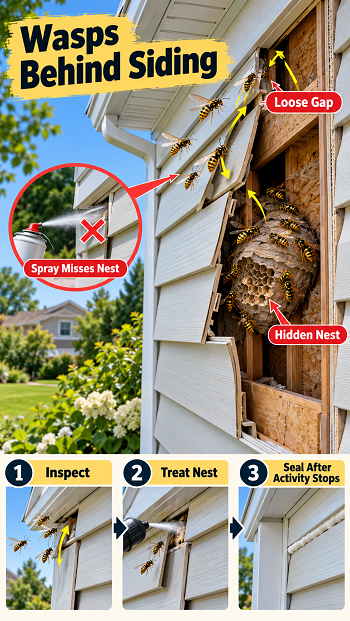
We get it. The can at the hardware store is cheap, and it says “wasp” right on the label. Here’s the catch. Foam or spray aimed at a siding gap rarely reaches the nest, which might sit three feet away inside the wall.
What it does accomplish is agitating a few thousand defenders. Some of them go looking for a new exit, and that’s how wasps end up buzzing around your living room lamp at ten o’clock at night.
Caulking the gap while the colony is still alive is the other classic mistake. The wasps don’t die. They chew. Drywall, insulation, the ring around a light fixture, whatever’s softer than the caulk.
Homeowners dealing with yellow jackets entering homes should avoid blocking active exits before the colony has been treated. Can the nest come back next year? Not that colony, since the workers die off with the first hard frost.
But a brand new queen will gladly reuse the same gap, which is why treatment and sealing both matter, in that order.
What to Expect When Our Jackson Wasp Pest Control Team Shows Up
It starts with a conversation, not a sprayer. Your technician will ask where you’ve seen activity, when it began, and whether anyone in the house is allergic to stings.
That’s part of our approach to residential pest control Jackson homeowners can rely on for identifying hidden infestations. Then comes the walk-around: spotting entry points, watching flight paths, sometimes pressing a hand against the wall to feel for vibration. On a big nest you can hear it through the drywall.
Treatment depends on what we find. Yellow jackets in a wall void usually get a dust formulation applied straight into the entry point. The workers track it into the nest for us, which is quiet, targeted, and reaches the colony where a spray never could.
Exposed paper wasp nests simply get removed. One thing we won’t do is seal the opening that same day. The colony needs a window to finish dying off, and closing it too early traps live wasps inside your wall.
Before we leave, you’ll get a plain-English rundown of what was done, what to watch for over the next few days, and when it’s safe to close up the gap. Most residential wasp jobs wrap up in a single visit.
What Happens Next: Sealing, Prevention, and the Other Pests Hiding Back There
Once activity stops, usually within a few days, the entry point gets sealed and we’ll point out any other gaps worth closing before next spring.
Those same gaps can allow other insects inside, making regular inspections helpful for preventing problems that might eventually require professional cockroach control services.
A ten-minute siding check every April catches new queens before they get established. That one habit prevents more wasp problems than any product on the shelf.
Here’s something homeowners rarely expect. The inspection for wasps often turns up neighbors. The same loose siding that lets a queen in is an open door for mice looking for a warm wall cavity in October.
Cockroaches follow moisture behind panels near a leaky spigot. We’ve even spotted signs of bed bugs on a porch chair while out looking at a wasp problem. If something else turns up, you’ll hear about it before it becomes its own emergency.
Mice pest control, cockroach pest control, and bed bug pest control all run on the same philosophy we use for wasps: find the way in, deal with what’s already there, and shut the door behind them.
Questions Jackson Homeowners Ask About Wasps in the Siding
Can I just leave the nest alone until winter?
A nest far from doors, decks, and play areas can sometimes wait a short while. One near an entry or a kid’s bedroom window shouldn’t. Yellow jackets get noticeably crankier as the season winds down and food gets scarce.
Will the treatment damage my siding?
No. Dust goes into the gap, not onto the panels, and nothing we use stains or warps vinyl.
Is pest extermination for wasps covered by a warranty?
Ask your technician what’s covered on your treatment. If the colony we treated is still active after the agreed window, we’ll come back and finish the job.
If you’ve got that hum behind the siding right now, give us a call or request a quote online. One of our Jackson pest control technicians will come out, take a look, and tell you exactly what’s going on back there.