Wasp Activity Around Hummingbird Feeders and Backyard Gardens
Warm weather brings hummingbirds, blooming flowers, backyard gatherings, and unfortunately, increased wasp activity. Many homeowners in Jackson, Michigan are surprised when they notice large numbers of wasps gathering around hummingbird feeders, vegetable gardens, flower beds, and outdoor living spaces.
While hummingbird feeders and gardens create a beautiful backyard environment, they can also provide everything certain wasp species need to thrive. Understanding why wasps are attracted to these areas can help reduce unwanted activity and prevent stings around your home.
Why Are Wasps Drawn to Hummingbird Feeders?
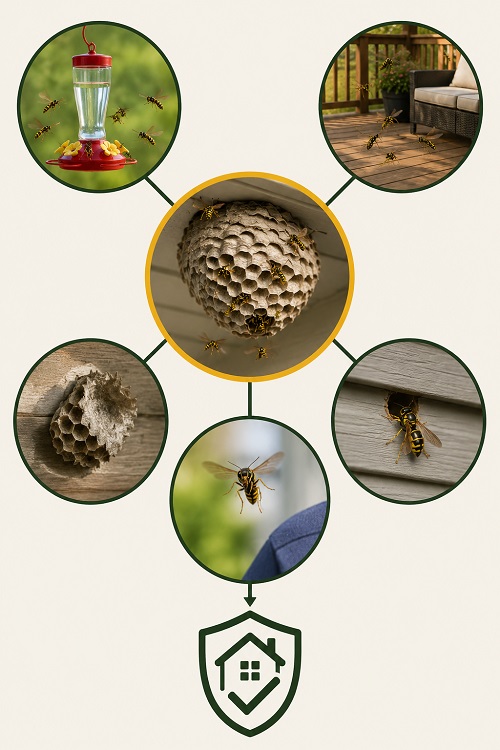
Hummingbird feeders contain a sweet nectar solution that closely resembles the natural sugars found in flowers. While hummingbirds love it, wasps and yellow jackets see it as an easy food source.
During late summer and early fall, wasps become especially aggressive in their search for sugar. Their colonies are reaching peak population levels, and workers spend much of their time searching for food to support the nest.
A hummingbird feeder can become a regular feeding station if conditions around the property create additional construction pest concerns or sheltered nesting opportunities.
- Nectar leaks from ports or seams
- Feeders are not cleaned regularly
- Sugar water drips onto nearby surfaces
- Feeders are placed close to known nesting areas
Many homeowners assume the feeder itself is causing the problem. In reality, the feeder often exposes an existing wasp population that is already living nearby.
Backyard Gardens Can Attract More Than Pollinators
A healthy garden naturally attracts beneficial insects. Bees, butterflies, and other pollinators play an important role in plant health. However, gardens can also attract wasps.
Flowering plants produce nectar that many wasp species feed on. Vegetable gardens can also attract insects that wasps hunt for food. Since wasps are predators, they often patrol gardens searching for caterpillars, flies, and other insects.
Common garden features that attract wasps include:
- Flowering plants with abundant nectar
- Fallen fruit from trees
- Compost piles
- Overripe vegetables
- Standing water sources
This doesn’t mean homeowners should remove these features. It simply means understanding how they fit into the larger pest activity around the property.
Yellow Jackets Are Often the Biggest Concern
Many people refer to every stinging insect as a wasp, but yellow jackets create some of the most serious problems for homeowners. Understanding basic yellow jacket safety tips can help reduce risks when activity increases around the home.
Unlike many other wasp species, yellow jackets become increasingly aggressive as summer progresses. They are highly attracted to sweet foods and drinks, making hummingbird feeders especially appealing.
A yellow jacket colony can contain thousands of insects by late summer. Once workers discover a reliable food source, they often return repeatedly and recruit additional workers.
This is one reason yellow jacket pest control becomes a common service request throughout Jackson and surrounding Michigan communities.
The Hidden Nest Problem
One of the biggest misconceptions homeowners have is that the feeder or garden is the problem. In many cases, hidden wasp nesting spots elsewhere on the property are responsible for the increased activity.
More often, the real issue is a nearby nest.
Wasps may build nests:
- Inside wall voids
- Under decks
- Beneath landscape features
- Inside sheds
- Under roof overhangs
- In the ground
You may only notice the activity around a feeder, but the colony itself could be hidden somewhere else on the property.
Professional inspections frequently uncover nests homeowners never knew existed.
Signs Wasp Activity Is Getting Worse
A few wasps visiting flowers isn’t usually a concern. However, growing numbers can indicate a developing infestation.
Watch for signs such as:
- Multiple wasps gathering daily around feeders
- Increased activity near decks or patios
- Visible nesting materials
- Wasps entering the same hole repeatedly
- Aggressive behavior when people approach
When activity reaches this level, it is often time to consider professional pest control services before the colony grows larger.
Protecting Your Family While Enjoying Your Backyard
Nobody wants to stop enjoying their garden because of wasps.
Simple prevention steps can reduce attraction without sacrificing your outdoor space.
Start by keeping hummingbird feeders clean and free from leaks. Replace nectar regularly and wipe away any spills. Fallen fruit should be removed promptly, and outdoor trash containers should remain tightly sealed.
Homeowners with children or pets should be especially cautious. Curious kids often discover nests accidentally, which can lead to multiple stings within seconds.
Questions homeowners often ask include:
Will removing my hummingbird feeder solve the problem?
Not necessarily. If a nest is nearby, wasps will simply look for another food source.
Are wasps beneficial in gardens?
Many wasps help control harmful insects. Problems occur when nesting activity develops too close to homes, walkways, patios, or play areas.
When should I call a professional?
If you see aggressive behavior, recurring activity, visible nests, or increasing numbers of wasps, professional treatment is usually the safest option.
Why Professional Wasp Pest Control Matters
Store-bought sprays may eliminate a few visible insects, but they rarely address the entire colony.
Certain nests can contain hundreds or even thousands of wasps. Improper treatment may agitate the colony and increase sting risks.
Professional pest extermination focuses on identifying the species, locating the nest, and applying targeted treatments designed to eliminate the source of the problem through proven local pest solutions.
Many homeowners are surprised to learn that a wasp issue can also reveal broader pest concerns around the property. During inspections, technicians often identify conditions that contribute to other pest problems as well.
Comprehensive pest control services frequently address concerns such as:
- Yellow jacket pest control
- Mice pest control
- Cockroach pest control
- Bed bug pest control
- General pest extermination programs
Addressing multiple pest risks together often provides better long-term protection for the home.
What to Expect During a Wasp Inspection in Jackson, Michigan
A professional inspection begins by identifying where wasps are feeding and where they may be nesting.
The technician will evaluate hummingbird feeders, garden areas, rooflines, landscaping features, sheds, and other potential nesting locations. Once the source is identified, treatment options can be recommended based on the species involved and the location of the nest.
Many wasp problems can be resolved quickly when addressed early. Waiting until late summer often allows colonies to grow substantially larger and more aggressive.
Keeping Outdoor Spaces Comfortable All Season
Backyard gardens and hummingbird feeders should attract enjoyment, not stress. A few preventative measures combined with prompt attention to increasing activity can make a significant difference.
When wasps begin taking over feeders, flower beds, patios, or outdoor gathering areas, professional pest control can help restore comfort and safety. Identifying hidden nests and eliminating the source of activity allows homeowners to enjoy their outdoor spaces without constantly worrying about stings.