
Signs of Hidden Carpenter Ant Damage
Most people picture termites when they think about wood-destroying insects.
Carpenter ants deserve just as much attention, though, because the damage they leave behind can be equally expensive — and a whole lot sneakier.
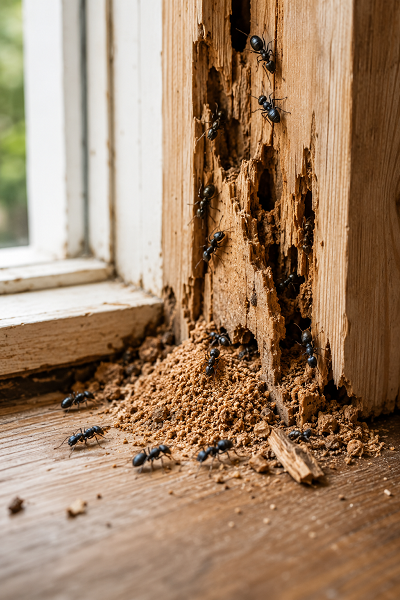
These pests don’t actually eat wood the way termites do. Instead, they hollow it out to build smooth, clean galleries where entire colonies can thrive for years without anyone noticing.
Our technicians walk into Michigan homes all the time where the homeowner had no idea carpenter ants had been chewing through structural beams behind finished walls.
That’s really the problem. The damage stays hidden until something soft, sagging, or crumbling finally gives it away.
How Carpenter Ants Operate Behind Your Walls
A carpenter ant colony doesn’t announce itself. The queen finds a moist, softened piece of wood — usually around a window frame, a leaky pipe, or anywhere condensation builds up — and the workers start excavating from the inside out.
They push fine sawdust-like shavings called frass out of tiny kick-out holes, and that’s often the first visible clue something’s wrong. It’s also why learning to spot wood rot early can prevent bigger infestations.
What makes carpenter ants different from a lot of other household pests is patience. A mature colony can contain thousands of workers and multiple satellite nests spread across a single property. One nest might be inside a bathroom wall while another sits in the garage door frame.
That kind of spread makes pest control for carpenter ants more involved than just spraying a baseboard and calling it done.
Red Flags You Shouldn’t Ignore in Your Michigan Home
Some signs are obvious once you know what to look for. Others take a trained eye. Here are the ones our team sees most often during inspections across Jackson, Lansing, and Battle Creek:
- Small piles of wood shavings or frass collecting near baseboards, windowsills, or on top of door trim
- Faint rustling or crinkling sounds inside walls, especially noticeable at night when the house is quiet
- Winged ants appearing indoors during spring, which signals a mature colony that’s been established for at least two to three years
- Wood that sounds hollow when you tap on it, particularly around bathrooms, kitchens, and exterior-facing walls
- Doors or windows that suddenly stick or won’t close properly without an obvious moisture explanation
Even one of these deserves a closer look. A couple of them showing up together? That’s your home asking for professional pest extermination before things get worse.
Why DIY Treatments Usually Miss the Mark
There’s no shortage of advice online about handling carpenter ants yourself. Boric acid, diatomaceous earth, store-bought baits — they all have their place for minor issues. The problem is that carpenter ant colonies are rarely minor by the time you notice them.
Spraying the ants you can see only kills foragers. The queen keeps producing. The satellite nests keep expanding. And because the real damage is happening inside wall cavities and structural wood, surface treatments just don’t reach where it counts. It’s a little like mopping up a puddle without fixing the leaking pipe.
Professional pest control works differently because it targets the colony structure itself. Our approach includes identifying the parent colony and every satellite nest, treating wall voids directly, and addressing the moisture conditions that attracted the ants in the first place. Without removing the invitation, new colonies will eventually move right back in.
What Does a Professional Carpenter Ant Inspection Actually Look Like?
Fair question — and one we get a lot from first-time callers. Nobody wants to feel in the dark about what’s happening in their own house.
When one of our technicians arrives, the inspection covers the full property.
We’re checking moisture readings in suspect areas, looking for frass deposits you might have missed, tracing ant trails, and probing wood for hidden gallery damage.
The process usually takes 30 to 60 minutes depending on the size of the home and how accessible certain areas are.
After that, you get a straightforward explanation of what we found and a treatment plan with no mystery pricing. If you’re dealing with an infestation in the capital region, our Lansing pest control team can help.
We’re big on making sure homeowners understand every step — because informed customers make better decisions about protecting their property long-term.
The Connection Between Moisture and Wood-Destroying Pests
Carpenter ants are moisture pests at heart.
They need damp, softened wood to establish a colony, which is why bathrooms, kitchens, crawl spaces, and areas around HVAC units are such common hot spots.
Here’s something that surprises a lot of homeowners: fixing a moisture problem after an infestation doesn’t automatically solve the pest problem.
Once a colony is established, they’ll continue expanding into dry wood too. The moisture was just the entry point. Effective pest control means treating the infestation and the conditions that enabled it — both at the same time.
This same moisture-pest relationship shows up across the board, by the way.
Whether we’re handling cockroach pest control, mice pest control, or even bed bug pest control, environment always plays a role in why pests choose one home over another.
Addressing those contributing factors is what separates a quick fix from a lasting solution.
What Happens After Treatment — And How to Keep Them Gone
Treatment day itself is pretty straightforward. Depending on the severity, it might involve targeted liquid applications in wall voids, dust treatments in galleries, and exterior perimeter barriers. Most homeowners can stay in the house during service.
Follow-up matters just as much as the initial treatment, though. Staying proactive with seasonal pest prevention helps reduce the chances of future infestations.
We schedule check-ins to confirm colony elimination and monitor for any satellite nest activity that might have been dormant during the first visit. Carpenter ant colonies don’t always collapse overnight — especially larger, well-established ones.
Long-term prevention comes down to a few practical habits:
- Keep firewood, lumber, and tree stumps away from the foundation
- Fix leaks immediately, even small drips under sinks or around toilet bases
- Trim branches and vegetation that touch the house so ants lose their bridge to the structure
These aren’t complicated steps, but they genuinely work. Combined with annual pest inspections and routine pest prevention, they’re the best insurance against a repeat infestation.
Real Protection Means Treating the Whole Picture
Carpenter ant damage isn’t just a nuisance — it’s a structural issue that gets more expensive the longer it goes unaddressed.
Whether you’ve spotted frass behind your dishwasher or heard something in the walls you can’t explain, getting a professional set of eyes on the situation early saves money and stress down the road.
Our team handles everything from carpenter ant colony removal to yellow jacket pest control to full-property pest extermination across Jackson, Lansing, Battle Creek, and surrounding Michigan communities.
If something in your home doesn’t look right, reach out. We’d rather inspect and find nothing than have you discover a serious problem six months too late.
Schedule Bed Bug Treatment Today
Contact us today for help with bed bugs.
Don’t let a small infestation become a major problem. Patriot Pest Control offers reliable bed bug extermination in Jackson, MI, designed to restore comfort and peace of mind.