

What to Do After Bed Bug Treatment
So the treatment is done. The technician packed up, walked you through the basics, and headed out. Now you’re standing in your home wondering — what happens next? That’s completely normal, and honestly, what you do in the hours and days after a bed bug treatment matters almost as much as the treatment itself.
Here’s the thing most people don’t realize: bed bug pest control doesn’t end the moment the technician leaves. The products and methods we use continue working for days, sometimes weeks, after the initial visit. Your job during that window is simple — don’t get in the way of the process. That means understanding a few ground rules and sticking to them.
Hold Off on Cleaning — Seriously
We get it. Your first instinct is to scrub everything down. Fight that urge, at least for now. Deep cleaning too soon can actually remove the residual treatments that are still doing their job along baseboards, bed frames, and furniture seams. Most pest control professionals recommend waiting at least two weeks before mopping, vacuuming along treated edges, or wiping down surfaces where product was applied.
Light tidying in untreated areas? Totally fine. But leave the treated zones alone and let the science work.
Can I Sleep in My Bed Tonight?
Short answer — yes. In fact, we recommend it. Sleeping in your bed actually helps draw out any remaining bed bugs that survived the initial treatment, bringing them into contact with the residual product. If you move to the couch or a spare room, you risk spreading the problem into areas that weren’t treated.
It can feel a little uncomfortable knowing that, but it’s genuinely one of the most effective things you can do to support the pest extermination process.
The First 48 Hours: What’s Normal and What’s Not
Don’t panic if you see a bed bug or two in the first couple of days after treatment. That doesn’t mean it failed. Some bugs that were hiding deep in cracks or wall voids may not have come into direct contact with the treatment right away. As they move through treated areas looking for a meal, they’ll pick up the product and die.
What should concern you is seeing consistent, ongoing activity three to four weeks after treatment. That’s when a follow-up visit makes sense, and it’s something our team plans for during the initial service.
Things You Should Be Doing After Treatment
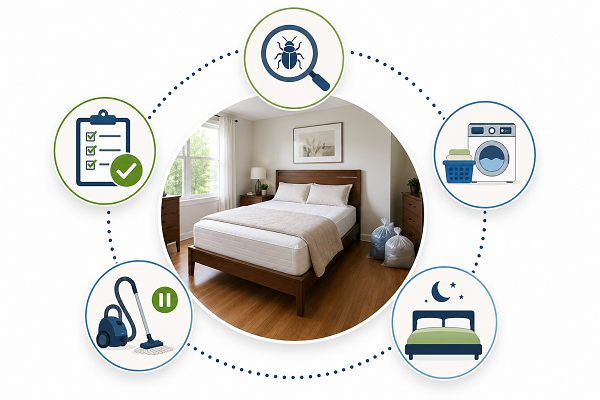
A few habits go a long way during the recovery period:
- Keep clutter off the floor and away from walls — bed bugs love hiding in stacked clothes, boxes, and bags sitting near baseboards
- Use mattress and box spring encasements if you haven’t already — they trap any remaining bugs inside and prevent new ones from settling in
- Wash and dry all bedding, pillows, and nearby clothing on high heat — the dryer is what actually kills them, not the washer
- Inspect your bed frame and headboard weekly for signs of new activity like small dark spots or shed skins
These aren’t complicated steps. But skipping them is one of the most common reasons people end up needing a second round of treatment.
Why Does Bed Bug Treatment Sometimes Take More Than One Visit?
Bed bugs are unlike cockroaches or mice in one frustrating way — their eggs are resistant to most treatments. A single female can lay hundreds of eggs during her lifetime, and those eggs can hatch seven to ten days after they’re laid. That means even a near-perfect treatment can leave behind eggs that produce a new round of nymphs.
This is exactly why follow-up visits are built into most professional bed bug pest control programs. It’s not a failure — it’s the nature of the pest. Think of it more like a two-step process than a one-and-done deal.
How Long Until I Know It Worked?
Most customers using our Jackson pest control services start to notice a real difference within the first week. Activity drops off significantly. Bites become less frequent, then stop altogether. By the three- to four-week mark, you should be sleeping without worry.
If you’re still noticing signs after that window, give us a call. We’ll come back, inspect everything again, and adjust the approach if needed. Bed bug pest control is not a guessing game — it’s methodical, and sometimes the timeline shifts depending on the severity of the infestation.
Why DIY Treatments Usually Make Bed Bugs Worse
Store-bought sprays rarely solve bed bug problems completely. Most DIY treatments only kill visible bugs while missing hidden eggs and nesting areas. In many cases, bed bugs simply move deeper into walls, furniture, or nearby rooms after treatment attempts.
Professional bed bug pest control involves a full inspection process, targeted treatments, and follow-up monitoring to make sure the infestation is fully eliminated.
Many customers are surprised to learn that bed bug treatments often require a customized plan depending on the property type. Hotels, schools, apartment complexes dealing with fast-moving infestations, and office buildings all need slightly different approaches.
Experienced pest extermination technicians also look for other pest concerns during inspections. It is common for commercial properties dealing with bed bugs to also ask about cockroach pest control, mice pest control, or yellow jacket pest control while addressing building maintenance issues.
Preventing a Comeback: The Long Game
Once you’re in the clear, prevention becomes the priority. Bed bugs are hitchhikers. They come home on luggage, used furniture, even clothing from public places. Michigan homeowners deal with this more than most people think, especially during travel season and when guests visit.
A few smart habits keep you protected long-term. Inspect hotel beds before unpacking during hotel travel to reduce the chance of bringing bed bugs home. Avoid bringing secondhand furniture inside without a thorough check. And if you notice anything suspicious — small bites, dark spots on sheets, a faint sweet odor — don’t wait. Early detection turns a minor issue into a quick fix instead of a full-blown infestation.
Other Pests Don’t Wait Either
While you’re focused on bed bugs, it’s worth noting that Michigan homes are vulnerable to more than one pest at a time. Yellow jacket nests can build up in wall voids during the same season you’re dealing with an indoor infestation. Cockroach pest control and mice pest control often overlap with bed bug situations, especially in older homes and multi-unit buildings.
A comprehensive pest control plan that includes preventative treatments saves money, prevents surprises, and keeps your whole property protected—not just the bedroom.
You Already Did the Hard Part
Calling a professional and getting the treatment done is the biggest step. Everything after that is follow-through, and you don’t have to figure it out alone. Our team at Patriot Pest Control walks every customer through post-treatment expectations because we’d rather you call with questions than try to handle something on your own and accidentally set the process back.
If you’re in the Jackson or Lansing, Michigan area and you need bed bug service, or just want to talk through what you’re seeing after a recent treatment, reach out to us or just want to talk through what you’re seeing after a recent treatment, reach out to us. We’re local, we’re straightforward, and we actually pick up the phone.
Schedule Bed Bug Treatment Today
Contact us today for help with bed bugs.
Don’t let a small infestation become a major problem. Patriot Pest Control offers reliable bed bug extermination in Jackson, MI, designed to restore comfort and peace of mind.