

Preventing Stink Bugs in Michigan RVs, Campers, and Seasonal Storage
Every September, the same call comes in from somewhere around Jackson. Someone opens their travel trailer after a few weeks of sitting, and there they are: dozens of brown, shield-shaped bugs lined up along the window frames like they paid for the spot.
That’s the brown marmorated stink bug, and to it your RV looks like a great place to spend the winter. It’s dry and sheltered, full of small gaps, and nobody bothers it for months. From the bug’s side, it’s a good choice.
From yours, it isn’t. Here’s how to keep them out of RVs, campers, boats, and seasonal storage in Michigan, and what happens when you bring in stink bug pest control that treats the problem properly.
Why Stink Bugs Pick RVs Over Your House
Stink bugs don’t eat your upholstery or chew wiring. They don’t breed indoors over winter either. What they want is shelter. When the nights start cooling off in late summer, they go looking for somewhere to wait out the cold, and they gather on warm, sunny surfaces while they search.
A parked camper is ideal for them. Slide-out seals loosen over time, roof vents have gaps, and fridge access panels are open to the outside. Many of the same conditions that explain what attracts stink bugs to newer homes also make RVs easy targets. A fifth-wheel sitting on a gravel pad next to a Jackson County cornfield gets a lot of visitors.
The trouble starts in spring. The bugs wake up inside your rig, crawl out of the walls, and release that musty, cilantro-like smell when you disturb them. Some folks spend their first camping weekend of the year vacuuming bugs instead of fishing.
What Should You Seal Before Storage Season?
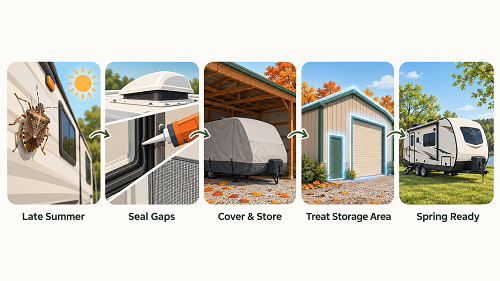
Most prevention comes down to timing and caulk. The goal is to close things up in late August through mid-September, before the bugs start moving. Once they’re already inside the walls, sealing just traps them in there.
Walk around your RV or camper and check:
- Slide-out rubber seals and wipers, which crack and flatten with age
- Roof vents, AC shrouds, and plumbing vent caps
- Refrigerator and water heater exterior access panels (fine mesh screen works well here)
- Window and door weatherstripping, especially the bottom corners
- Gaps where wiring, propane lines, or sewer hoses pass through the floor
- Storage bay doors that don’t latch tight anymore
If the unit lives in a pole barn or garage over winter, check the building too. Stink bugs gather in that building first, then move into whatever’s parked inside. Gaps around overhead doors and soffit vents are the usual way in.
Covers Help. They Don’t Solve It.
A good breathable RV cover keeps a lot of bugs off the exterior, and we recommend using one. But stink bugs are good at finding the one loose corner of a cover that a strap missed. Treat the cover as one layer and do the sealing too.
One more tip that saves a lot of cleanup: never crush them. Sweep them into a jar of soapy water or use a shop vac you don’t mind smelling like stink bug for a while.
Stink Bug Pest Control in Jackson, Michigan: What a Visit Looks Like
So you’ve sealed what you can, and bugs are still showing up. That’s pretty common, especially near farmland or wooded lots, and it’s where a professional pest control visit helps.
Our technician starts by looking around. We check where the bugs are gathering, which sides of the rig or building get the afternoon sun, and where the likely entry points are. Sometimes the source turns out to be the storage building rather than the camper.
Next is the treatment. We apply a targeted exterior treatment to the surfaces stink bugs land on and crawl across before they find a way in, including the siding, eaves, and door frames of the storage structure. Timing matters, so fall treatments are scheduled before the bugs settle in for winter.
After that, we follow up. We’ll tell you what we found, point out any gaps worth sealing, and let you know if a spring check makes sense. No sales pitch, just what we saw.
What Else Is Moving Into Your Camper This Winter?
Stink bugs are rarely the only thing looking for winter housing. Mice are the bigger worry for most RV owners because they chew wiring, insulation, and anything soft enough to nest in. Our mice and rat control service covers the same storage areas, and it’s a good idea to handle both at once.
Here’s what else we see around stored rigs in Michigan:
- Yellow jacket pest control for nests built in wheel wells, bumpers, and awning arms over the summer
- Cockroach pest control, usually when a camper was used heavily and stored with food still inside
- Bed bug pest control for rigs that travel a lot, stay at busy campgrounds, or were bought used
Buying a used camper? Get it inspected before the first trip. The same idea applies when checking signs of infested furniture before bringing secondhand items into the rig. It’s a lot easier to handle pest extermination in an empty unit on a driveway than after it’s packed for a week up north.
Ready for Spring?
The best case is simple: you open the door in April, it smells like a camper, and the only thing in the windowsill is dust. Seal early, cover well, and call us before the bugs settle in if your storage spot sees heavy pressure every fall.
Our team works throughout Jackson and the surrounding area. We know how Michigan fall weather goes, and we know where stink bugs like to hide.