

Preventing Rodents in Garages and Sheds
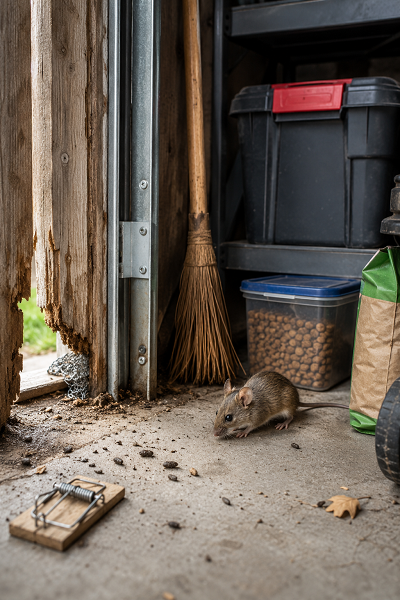
Your garage door closes every night, and you assume that’s good enough. Meanwhile, a mouse only needs a gap the width of a dime to slip inside, set up camp behind your lawn mower, and start chewing through whatever it finds first.
Garages and sheds rank among the most common entry points for rodents across Jackson, Lansing, and Battle Creek — and most homeowners don’t realize there’s a problem until the damage is already done.
Rodent prevention isn’t just about traps or poison. It’s about understanding why these spaces attract mice and rats in the first place, sealing the gaps they exploit, and knowing when professional pest control makes more sense than another weekend DIY project.
Why Mice and Rats Love Your Garage More Than You Do
Think about what a garage or shed offers from a rodent’s perspective.
Shelter from Michigan winters. Minimal foot traffic. Cardboard boxes stacked in corners. Pet food bags left open. A water source from condensation or a leaky spigot. That’s not just a hiding spot — that’s a five-star rodent hotel.
Mice pest control calls spike every fall in the Jackson and Lansing areas because dropping temperatures push rodents indoors. Homeowners looking for Lansing pest services often see activity increase as cooler weather arrives.
But garages and sheds stay vulnerable year-round. Even in summer, a cluttered storage shed gives mice and rats exactly the kind of undisturbed nesting environment they prefer.
And here’s what catches people off guard: rodents don’t just stay in the garage. Once they establish a foothold in an outbuilding, they start exploring. That attached garage becomes a highway straight into your kitchen walls.
The Gaps You’re Probably Missing
Sealing entry points sounds straightforward enough. But most homeowners underestimate just how small the openings are that rodents use.
A young mouse can squeeze through a hole the size of a pencil eraser. Rats need a bit more room, but not much — roughly half an inch will do.
Here are the spots we see compromised most often during inspections:
- The rubber weather stripping along the bottom of garage doors, especially where it’s cracked, warped, or pulling away from the frame
- Utility penetrations where electrical conduit, water lines, or dryer vents pass through exterior walls
- Gaps around side entry doors, window frames, and where the foundation meets the siding
- Shed floors with rotting wood or gaps between floorboards and the ground, especially since moisture-damaged wood can also attract carpenter ant infestations over time.
Steel wool packed into smaller gaps and hardware cloth over larger openings work well as short-term fixes. But lasting rodent exclusion usually requires a more thorough approach — one that accounts for how determined these animals actually are.
What Does Rodent Damage Actually Look Like in Michigan?
Rodent damage goes way beyond chewed-up boxes. In garages especially, mice and rats gnaw on wiring — and that creates a legitimate fire hazard. We’ve seen vehicle wiring harnesses destroyed, irrigation system controls shorted out, and insulation shredded for nesting material.
Then there’s the contamination issue. Rodent droppings and urine carry bacteria and allergens that linger long after the animals are gone. In enclosed spaces like sheds and garages with poor ventilation, that exposure adds up.
The financial side isn’t pretty either. Between structural repairs, rewiring, and cleanup, a rodent infestation that started in a garage can cost homeowners thousands of dollars. Pest extermination early on is almost always cheaper than dealing with the aftermath.
So What Actually Works? A Realistic Prevention Strategy
Keeping rodents out of garages and sheds requires a combination of habitat modification, exclusion, and monitoring. No single tactic handles it alone.
Cut off food and water sources
Store birdseed, pet food, and grass seed in sealed metal or heavy plastic containers. Eliminating hidden food sources around your property makes garages far less attractive to rodents. Fix leaky hoses. Sweep up spilled fertilizer or garden amendments. Rodents are opportunistic — remove the easy meals and they’ll look elsewhere.
Reduce clutter and nesting opportunities
Cardboard is a rodent magnet. Swap cardboard storage boxes for plastic totes with tight-fitting lids. Keep items off the floor where possible and maintain clear sightlines along walls so you can spot droppings or gnaw marks early.
Inspect seasonally
Walk the perimeter of your garage and shed at least twice a year — once before winter and once in early spring. Following a seasonal prevention plan helps catch small issues before rodents settle in. Look for new gaps, displaced weather stripping, and signs of burrowing near foundations.
Monitor with intention
Snap traps placed along walls and in corners tell you whether rodents are active before a full infestation develops. Checking traps regularly matters more than setting a dozen and forgetting about them.
When Should You Call a Professional?
Honestly? Earlier than most people think. DIY prevention covers the basics, but there are situations where professional mice pest control is the smarter move.
Have you seen more than one or two mice?
That usually means a breeding population is already established. Trapping alone won’t keep up.
Are you finding droppings in multiple locations?
Widespread droppings suggest rodents are moving freely through the structure, which means multiple entry points need to be identified and sealed.
Is the garage attached to your home?
The stakes go up significantly when rodents have a direct path into living spaces. A comprehensive exclusion plan protects the whole property — not just the garage.
Professional pest control also means proper identification. Mice and rats behave differently and require different strategies. Norway rats burrow along foundations while roof rats climb. Treating one like the other wastes time and money.
How Patriot Pest Control Handles Rodent Problems in Jackson, Lansing, and Battle Creek
Our process starts with a thorough inspection — not just inside the garage or shed, but around the full perimeter of the property.
We identify active entry points, assess the scope of the infestation, and look for conditions that attracted rodents in the first place.
From there, we build a treatment and exclusion plan tailored to your specific situation.
That includes sealing entry points with professional-grade materials, strategic trap and bait placement, and follow-up visits to make sure the problem stays solved.
We also handle other pest pressures that tend to show up alongside rodent issues.
Cockroach pest control, bed bug pest control, yellow jacket pest control — pest problems rarely exist in isolation, and a garage with rodent activity often has other uninvited guests too.
Your Garage Doesn’t Have to Be a Rodent Welcome Mat
A little prevention goes a long way, but knowing when to bring in help goes even further. If you’re seeing signs of rodent activity in your garage or shed — or you just want a professional set of eyes on the situation before winter hits — reach out. We serve homeowners across Jackson, Lansing, Battle Creek, and the surrounding communities, and we’d rather help you prevent a problem than clean up after one.
Schedule Bed Bug Treatment Today
Contact us today for help with bed bugs.
Don’t let a small infestation become a major problem. Patriot Pest Control offers reliable bed bug extermination in Jackson, MI, designed to restore comfort and peace of mind.