
How Moisture Problems Attract Carpenter Ants
Carpenter ants don’t just show up randomly. In most homes, there’s a reason they chose that exact spot—and moisture is usually at the center of it.
If you’ve started seeing large black ants around baseboards, windows, or bathrooms, there’s a good chance there’s a hidden moisture issue nearby. This is similar to carpenter ants in decks and sheds where moisture buildup goes unnoticed.
Fixing the ants without addressing the water problem rarely works long-term. That’s where a more complete pest control and pest extermination approach makes the difference.
Why Carpenter Ants Love Moisture-Damaged Wood
Carpenter ants don’t eat wood like termites, but they do excavate it to build nests. And they prefer wood that’s already softened.
Moisture weakens wood fibers. It makes it easier for ants to carve out tunnels and expand their colonies quickly. Areas with consistent humidity or water exposure essentially become ideal nesting zones.
Common moisture sources that attract carpenter ants include:
- Leaky pipes under sinks or behind walls
- Poor ventilation in bathrooms or attics
- Roof leaks or damaged flashing
- Wood in contact with soil or standing water
- Condensation around windows and HVAC systems
Once that wood softens, carpenter ants move in quietly. Most homeowners don’t notice until the colony has already grown. The same delayed discovery happens with infested furniture brought inside without inspection.
Where Moisture Problems Usually Start
The tricky part is that moisture issues aren’t always obvious. You might not see water, but the conditions are still there.
Inside homes, the most common trouble spots include kitchens, bathrooms, laundry rooms, and crawl spaces. Outside, it’s often around gutters, siding, or landscaping that traps moisture against the structure.
You might ask yourself:
- Why are ants showing up in only one area of the house?
- Why do they keep coming back after spraying? It’s the same reason cockroaches return to warm hidden areas even after treatment.
- Why does it seem worse after rain or humidity spikes?
Those patterns usually point back to a moisture-related problem—not just a pest issue.
Signs You’re Dealing With Carpenter Ants (Not Just Any Ants)
Not all ants are tied to moisture. Carpenter ants are.
Here are a few things that help identify them:
- Larger size compared to typical household ants
- Sawdust-like material (called frass) near walls or trim
- Rustling sounds inside walls in quiet environments
- Increased activity at night
If these signs show up near damp areas, it’s rarely a coincidence.
Moisture + Carpenter Ants = A Growing Structural Problem
Left alone, carpenter ants don’t just stay in one spot. They expand.
As long as moisture is present, they’ll continue tunneling deeper into wood structures. Over time, this can weaken framing, window casings, and even support beams.
It’s not just cosmetic damage. In some cases, repairs become expensive because the wood has been compromised from both moisture and ant activity.
This is where professional pest control becomes less about convenience and more about protecting the structure itself.
Why DIY Treatments Often Miss the Real Issue
Sprays and store-bought treatments might kill visible ants, but they don’t eliminate the colony. The same problem applies to rodents find out why store-bought traps fail against hidden infestations. More importantly, they don’t solve the moisture problem that attracted them in the first place.
Without addressing both, the ants return. Sometimes within weeks.
A proper pest extermination plan looks at:
- Where the colony is actually nesting
- What moisture source is supporting it
- How to treat both the ants and the conditions
That’s why a quick fix rarely lasts.
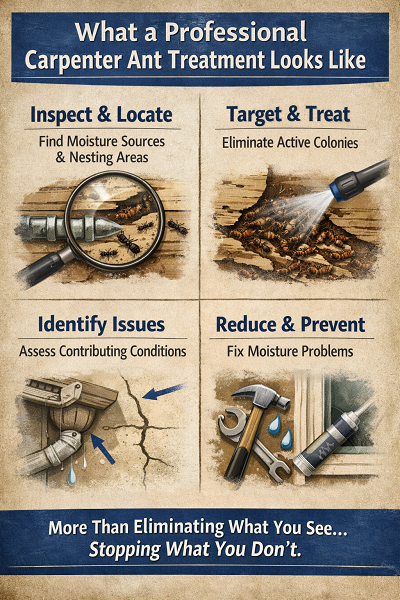
What a Professional Carpenter Ant Treatment Looks Like
A full service approach is straightforward, but it’s intentional.
Here’s what typically happens during a service:
- Inspection to locate moisture sources and nesting areas
- Targeted treatment of active colonies inside and outside
- Identification of conditions contributing to the problem
- Recommendations to reduce moisture and prevent re-entry
It’s not just about eliminating what you see. It’s about stopping what you don’t.
It’s Rarely Just Carpenter Ants
Homes with moisture problems often deal with more than one pest at a time. Carpenter ants might be the first sign, but they’re usually not the only issue.
It’s common to uncover:
- Cockroach pest control concerns in damp kitchens or garages
- Mice pest control issues in crawl spaces or wall voids
- Bed bug pest control needs unrelated but discovered during inspection
- Yellow jacket pest control issues around exterior moisture sources
Moisture creates an environment where multiple pests can thrive. Addressing one without considering the others can leave gaps.
Preventing Carpenter Ants Starts With Moisture Control
You don’t need to overhaul your entire home, but small changes can make a big difference.
Focus on reducing excess moisture wherever possible:
- Repair leaks quickly, even minor ones
- Improve ventilation in enclosed spaces
- Keep gutters clean and directing water away from the home
- Seal cracks where water and pests can enter
These steps don’t replace professional pest control, but they support it and help keep problems from returning.
What To Expect Moving Forward
If carpenter ants are already active, the goal is to eliminate them and prevent future activity. That means addressing both the infestation and the underlying moisture conditions.
A thorough pest extermination plan will:
- Stop current carpenter ant activity
- Identify hidden risks you may not have noticed
- Reduce the chances of repeat infestations
- Help protect your home from additional pest problems
Once the moisture issue is under control, the environment becomes much less appealing for carpenter ants and other pests.
Schedule Bed Bug Treatment Today
Contact us today for help with bed bugs.
Don’t let a small infestation become a major problem. Patriot Pest Control offers reliable bed bug extermination in Jackson, MI, designed to restore comfort and peace of mind.