

Health Risks of Fleas for Families
Fleas are easy to underestimate. They’re tiny, quick, and often first noticed on pets—but the real concern goes beyond itchy bites. Once fleas settle into a home, they can impact the health of everyone inside, from kids playing on the floor to pets that sleep on the couch.
Understanding what fleas bring with them helps you act faster and avoid a small issue turning into a full-blown infestation.
Why Fleas Are More Than Just a Pet Problem
It usually starts with a dog or cat scratching more than usual. Then bites show up on ankles. Before long, it feels like something is off throughout the entire home.
Fleas don’t stay on one host. They move between pets, carpets, furniture, and people. Eggs fall into fibers, hatch, and continue the cycle quietly.
That’s what makes them tricky. You’re not just dealing with what you can see — that’s why professional flea pest control addresses what’s developing underneath the surface.
Hidden Health Risks Fleas Bring Into the Home
Flea bites aren’t just annoying. They can lead to real health concerns, especially in households with kids or pets.
Some of the most common issues include:
- Skin irritation and allergic reactions – Some people develop flea allergy dermatitis, leading to intense itching and inflammation
- Secondary infections – Scratching bites can break the skin and invite bacteria
- Tapeworm transmission – Pets can ingest infected fleas while grooming
- Disease exposure – Fleas are known carriers of certain bacteria that can affect humans
Even a small infestation can create a ripple effect. What begins as a few bites can quickly turn into discomfort that doesn’t go away.
How Fleas Affect Children and Pets Differently
Kids tend to spend more time on floors, rugs, and furniture—exactly where fleas thrive. That puts them in closer contact with flea populations than most adults realize.
Pets, on the other hand, deal with fleas constantly once infested. It’s not just scratching. You may notice:
- Hair loss or thinning patches
- Red, irritated skin
- Restlessness or changes in behavior
For families, this turns into a cycle. Pets bring fleas in, fleas spread through the home, and everyone ends up dealing with the consequences.
Where Fleas Hide (And Why They Spread So Fast)
Fleas don’t need much to survive. Warmth, a host, and a place to lay eggs are enough.
Inside homes, they commonly settle into:
Carpet fibers and padding
Upholstered furniture
Pet bedding and sleeping areas
Cracks along baseboards and flooring
Once eggs are laid, they can hatch within days. That’s why flea problems seem to appear overnight. In reality, they’ve been building quietly.
Outdoor areas can also play a role — fleas in outdoor areas like shaded yards and decks often become starting points for infestations that move indoors.
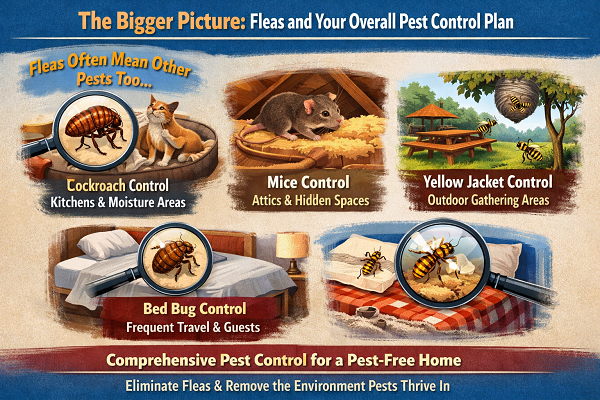
The Bigger Picture: Fleas and Your Overall Pest Control Plan
Flea issues rarely exist in isolation. Homes dealing with fleas often have conditions that attract other pests as well.
It’s common to see services combined, including:
- Cockroach pest control for kitchens and moisture-prone areas
- Mice pest control for insulation and hidden spaces
- Yellow jacket pest control for outdoor gathering areas
In some cases, bed bug pest control may also come into play, especially in homes with frequent travel or guests.
A broader pest control and pest extermination approach helps eliminate not just fleas, but the environment that allows pests to thrive in the first place.
Signs It’s Time to Take Action
Some flea problems are obvious. Others take longer to connect.
Here are a few things to watch for:
- Bites appearing around ankles or lower legs
- Pets scratching more than usual
- Small dark specks (flea dirt) on bedding or furniture
- Fleas visible when brushing or bathing pets
Seeing one or two fleas might not seem urgent, but it usually means more are hiding nearby — learn about pests hiding in plain sight throughout your home.
What to Expect From a Professional Flea Treatment
Getting rid of fleas takes more than a quick spray. Their life cycle includes eggs, larvae, pupae, and adults—all of which need to be addressed.
A typical pest control service focuses on:
Inspection of both indoor and outdoor areas
Targeted treatment of high-activity zones
Breaking the flea life cycle at multiple stages
Recommendations for pet care and follow-up steps
Timing matters. Treatments are often scheduled in phases to make sure newly hatched fleas don’t restart the problem.
What Happens Next: Keeping Your Home Protected
After treatment, small adjustments go a long way. Vacuuming regularly, washing pet bedding, and managing outdoor areas all help reduce the chances of fleas returning.
Consistency is what keeps things under control. A one-time fix might solve the immediate issue, but ongoing pest control keeps your home protected long-term.
Families that stay proactive tend to avoid repeat infestations and the stress that comes with them.
Common Questions About Fleas in Homes
Can fleas live in a home without pets?
Yes, although pets are the most common carriers, fleas can survive in carpets and furniture if conditions are right.
Are flea bites dangerous?
They’re usually mild, but allergic reactions and infections from scratching can make them more serious.
How long does a flea infestation last?
Without treatment, it can continue for weeks or even months due to the flea life cycle.
A Healthier Home Starts With the Right Approach
Fleas are small, but the impact they have on a household can be surprisingly big. From irritation to potential health risks, they affect more than just pets.
Taking care of the issue early—and treating the home as a whole—makes the difference between a quick fix and an ongoing problem.
Schedule Bed Bug Treatment Today
Contact us today for help with bed bugs.
Don’t let a small infestation become a major problem. Patriot Pest Control offers reliable bed bug extermination in Jackson, MI, designed to restore comfort and peace of mind.