
Spider Problems in Apartment Buildings
Apartment living comes with shared walls, shared spaces—and sometimes shared pest problems. Spider activity is one of the more common complaints in multi-unit properties, especially as seasons change or other pest issues develop. Our spider pest control services are built around exactly these situations. What starts as a few webs in corners can quickly turn into something tenants notice and report.
Spider problems in apartment buildings are rarely isolated. They’re usually tied to a larger pest control issue that needs a more complete approach.
Why Spiders Show Up in Apartment Buildings
Spiders don’t move in randomly. If they’re inside, it usually means there’s a steady food source and plenty of hiding spots.
In apartment settings, that combination is easy to find:
- Other insects already present (ants, flies, even small roaches)
- Cluttered storage areas, basements, and utility rooms
- Gaps around windows, doors, and shared walls
- Exterior lighting that attracts bugs at night
Spiders follow the food. So when tenants start seeing webs, it’s often a sign that other pest control issues are already happening behind the scenes — including hidden attractants in basements that fuel the whole cycle.
It’s Not Just One Unit
One of the biggest misconceptions with spiders is thinking the problem stays contained to a single apartment. In reality, multi-unit buildings allow pests to move freely through:
- Wall voids
- Plumbing lines
- Electrical pathways
- Shared ventilation systems
That means even if one tenant keeps a spotless space, they can still experience spider activity coming from neighboring units — the same way pests spread between apartment units throughout a building.
This is where a building-wide pest extermination strategy makes a difference instead of treating one complaint at a time.
What Residents Usually Notice First
Spider problems tend to build quietly before they become obvious. Most tenants don’t report it until activity increases.
Here are a few early signs that shouldn’t be ignored:
- Webs forming in corners, ceilings, or stairwells
- Spiders appearing near windows or light fixtures
- Increased insect activity inside the unit
- Egg sacs tucked into hidden areas
Once egg sacs are present, populations can grow quickly. That’s usually when complaints start picking up across multiple units.
Why Spider Problems Often Mean More
Spiders themselves aren’t usually the main issue—they’re the symptom.
If a building has enough food to support spider populations, there’s a good chance other pest problems are active too. It’s common to see overlapping services in apartment environments, including:
- Cockroach pest control in kitchens and trash areas
- Mice pest control in walls, basements, and storage rooms
- Bed bug pest control in high-turnover units
- Yellow jacket pest control around entryways, balconies, and dumpsters
Addressing only the spiders without tackling the root causes tends to bring the problem right back.
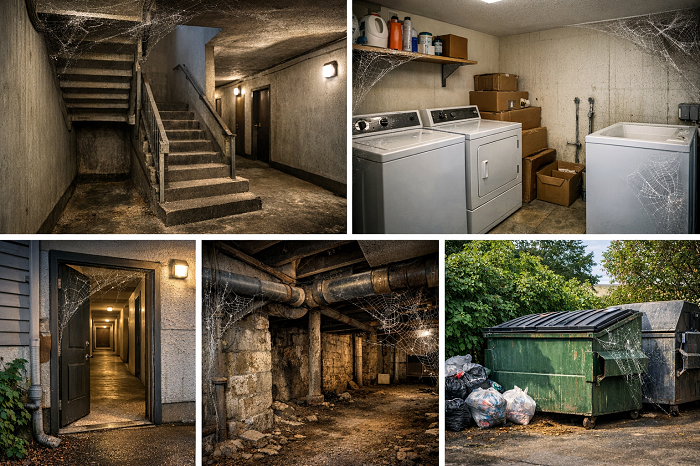
Common Hot Spots Around Apartment Properties
Certain areas of apartment buildings consistently attract spider activity. These spots often need extra attention during inspections and treatment.
- Hallways and stairwells with low traffic
- Laundry rooms and storage areas
- Exterior entry points and breezeways
- Basement and crawl spaces
- Around dumpsters and trash compactor zones
Even outdoor landscaping can play a role. Bushes and trees placed close to buildings create easy access points for spiders to move indoors.
What to Expect from Professional Pest Control
When spider problems show up in an apartment building, the process usually starts with a full inspection—not just the unit that reported it.
A solid pest control plan will include:
- Identifying where spiders are nesting and feeding
- Looking for underlying insect activity
- Sealing common entry points where possible
- Applying targeted treatments in high-activity areas
- Coordinating with property management for building-wide coverage
In many cases, treating one unit isn’t enough. The goal is to break the cycle across the entire property.
Questions Property Managers and Tenants Ask
Are spiders dangerous?
Most spiders found in apartment buildings aren’t harmful, but that doesn’t make them welcome. The bigger concern is what’s attracting them.
Why do they keep coming back?
If the food source isn’t addressed, spiders will return. That’s why broader pest control matters.
Can cleaning alone fix it?
Cleaning helps reduce hiding spots, but it won’t eliminate the issue if pests are moving through walls or shared spaces.
A More Complete Approach to Pest Control
Spider control works best when it’s part of a bigger plan. Apartment buildings need consistent monitoring, not one-time treatments.
A layered pest control approach might include:
- Routine inspections across units and common areas
- Preventative treatments for insects and rodents
- Seasonal adjustments based on pest activity
- Quick response to tenant reports
This kind of strategy keeps problems from spreading instead of constantly reacting to them.
What Happens Next
Once a spider issue is identified, timing matters. The sooner treatment starts, the easier it is to contain.
Expect a combination of:
- Initial service to reduce active populations
- Follow-up visits to monitor and adjust treatment
- Communication with tenants or management about access and timing
Consistency is what keeps spider problems from becoming a recurring complaint across the property.
Schedule Bed Bug Treatment Today
Contact us today for help with bed bugs.
Don’t let a small infestation become a major problem. Patriot Pest Control offers reliable bed bug extermination in Jackson, MI, designed to restore comfort and peace of mind.